Field guide.
This replaces the old mission checklist. It is a flexible route through the pack: each milestone gives you a destination, a preparation list, the systems worth using there, and a reason to return home.
Follow the world outward.
Every stage establishes something permanent: food, trade, navigation, a safe expedition base, ocean capability, or Nether combat readiness. That means exploration improves the world instead of becoming a string of disposable trips.
Homestead loop
Turn the existing house into a reliable departure point.
Village network
Make one village useful enough to revisit.
Surface survey
Map fresh chunks and learn which structure families appear nearby.
Deep expedition
Move from sightseeing to sustained underground combat.
Ocean circuit
Combine wildlife research, structure hunting and aquatic materials.
Nether campaign
Build a route that supports repeated high-risk hunts.
Choose gear for the trip.
Obsidian Armor, a shield, a versatile weapon, a Packed Up backpack and food that stacks cleanly.
Short-range weapon plus reach option, spare pickaxe, torches, blocks and a safe chest outside the entrance.
Capture Net, buckets, shears and empty storage before adding more damage.
Fire resistance, reliable ranged damage and a weapon you can afford to recover or replace.
Use Keeg’s Weapons and Weapons Expanded to pick a role—reach, speed, crowd control or a signature heavy hit—then verify its recipe in Crafting.
Read structures by scale.
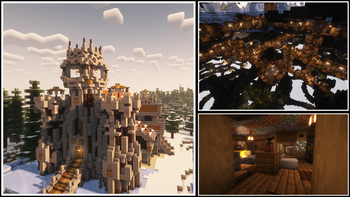
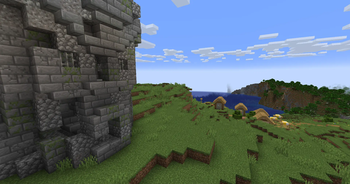

| Family | Best use | Field rule |
|---|---|---|
| Forest Ruins | Short local exploration and hidden-space searches | Check forest edges and interiors; inspect for containers and concealed rooms. |
| Structory | Atmospheric landmarks and route memory | Mark useful structures even when the immediate loot is modest. |
| Moog’s Voyager Structures | Large variety, rare landmarks and biome-specific discoveries | Travel broadly in fresh Overworld chunks; rare towers and cathedrals may be far apart. |
| Roguelike Dungeons | Long combat sessions, spawners and tiered loot | Establish a safe surface base and return route before going deep. |
| Friends & Foes sites | Specific mobs and special rewards | Snowy cabins, illager sites and Nether Citadels are destinations, not incidental scenery. |
Make a named network.
The single obvious return point beside the main house—not hidden in a storage room.
At the protected trade village, close enough to be safe but not blocking villager movement.
Outside the dangerous structure with spare food, blocks and a recoverable exit route.
A secured interchange between Overworld and Nether routes.
Use consistent waypoint names: biome or structure first, purpose second—“Snowy Cabin / Iceologer,” not “cool place.”
Three separate storage rules.
Use backpack tiers for mobile capacity. Keep essential return items in the same predictable slots.
Eligible generated chests can give each player a separate loot roll. Ordinary player chests remain shared storage.
Test the exact server behavior using expendable items before trusting it with rare gear or a full backpack.
Before changing the pack.
Expect them in fresh chunks. Already generated terrain, including pregenerated terrain, normally remains unchanged.
Back up the world first. Existing blocks, items or entities from the removed mod can disappear or become invalid.
Keep Lithium and FerriteCore. When the server lags, entity AI, view distance and generating new chunks often matter more than adding raw memory.
Xaero’s maps and AppleSkin affect each player’s interface; everyone who wants those displays installs them on their own client.